Spinach is one of the most consumed and produced vegetables in our country during the winter months.
healthy whole foods and organic foods in your life a lot easier
Spinach
Oleaster
Here is the detailed information about OLEASTER (Elaeagnus angustifolia): Detailed Information About Oleaster (Elaeagnus angustifolia), commonly known as oleaster, Russian olive, or wild olive, is a plant species widely found in Anatolia, Central Asia, the Caucasus, and the Mediterranean basin. It is used both as an ornamental plant and a fruit tree. Belonging to the Elaeagnaceae family, oleaster holds significant ecological and cultural importance.
Below is detailed information about OLEASTER.
Organic foods: Are they safer? More nutritious?
Discover the difference between organic foods and their traditionally grown counterparts when it comes to nutrition, safety and price.
Safe, healthy and budget-friendly foods are a grocery shopper's dream. Do organic foods make that dream come true? Maybe, but don't bypass foods and products grown using standard farming methods. There are benefits to both.
People choose foods for many reasons.
Factors such as what you like to eat, what you can afford and your values play into your purchases. Also, you may buy certain products based on your current health and the hoped-for future health effects of a certain diet.
A healthy diet can include food grown organically or using typical farming methods, called conventional farming. But if you've wondered about organic food, here's how it compares with conventionally grown food.
Thinking about adding organic foods to your diet? Here are tips for what to buy and how to make organic food less costly.
What is organic food?
Organic foods are items grown under specific conditions or products made with those foods. The organic food label says more about how an item was farmed than about the food itself.
Organic farming is a type of agriculture that avoids the use of some typical farming practices.
Organic farmers can't use some types of soil additives and fertilizers, genetic engineering, or radiation on their products. Organically farmed animals aren't given hormones for growth or antibiotics. Also, these animals get organic feed and must have the option to go outside.
Benefits of Pumpkin:
Pumpkin is a type of winter squash that belongs to the Cucurbitaceae family.
It’s typically round with smooth, slightly ribbed skin and a deep orange or
yellow color, though some varieties can be green, white, or gray. Pumpkins
are native to North America and have been cultivated for thousands of years.
They’re not only a staple in many cuisines but also widely recognized for
their nutritional value.
The Benefits of Broccoli
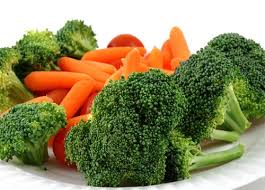
Broccoli, a member of the cabbage family, is a vegetable that is mentioned together with Italy and is identified with that region. The spread and recognition of broccoli around the world took place in the 1900s. To date, broccoli, although it does not find a place for itself in the list of the most popular vegetables, it is at the top of the list of the most beneficial vegetables. Since the production has increased in our country in recent years, there is no difficulty in obtaining it. It can be easily found in Sundays and greengrocers. In studies, it has been found that broccoli contains much more carotene than carrots. It is accepted that both its juice and itself are among the best vegetables that can be consumed. Broccoli can be consumed by making a salad or a meal, as well as boiled and water is consumed.
It is an amazing vegetable that protects us against cancer and prolongs our life. It is very effective against bone resorption because it contains a large amount of calcium. Broccoli, which relieves mineral and iron deficiency, is a storehouse of vitamins. Bowel and lung cancer are rarely seen in broccoli lovers, and heart circulatory diseases are not very common. It is effective against breast cancer disease and prevents breast cancer in women. Broccoli contains a lot of a substance called indole, which reduces the risk of breast cancer. Indole prevents estrogen disorders that cause breast cancer.
Tomatoes
Tomatoes are botanically defined as fruits because they form from a flower and contain seeds. Still, they’re most often utilized like a vegetable in cooking. In fact, the US Supreme Court ruled in 1893 that the tomato should be classified as a vegetable on the basis of its culinary applications.
It’s not uncommon for culinary practices to blur the lines of scientific definitions of what constitutes a fruit or a vegetable. Many plants that are considered to be vegetables are actually fruits.
For all intents and purposes, tomatoes are both. If you’re talking to a farmer or gardener, they’re fruits. If you’re talking to a chef, they’re a vegetable.
Potassium Rich Foods
Unconscious
dieting often negatively affects people's health. If you’re like
most people in the the world., you likely don’t get enough potassium in your diet. Like calcium and sodium, potassium is
a mineral that’s found in some foods. Having the right amount of potassium in
your diet helps to
keep you healthy, so it’s crucial to eat plenty of potassium-rich foods.
Food Sources of Potassium
Many of the foods that you already eat contain potassium. The foods
listed below are high in potassium. If you need to boost the amount of
potassium in your diet, make healthy food choices by picking items below to add
to your menu.
Benefits of Eating Eggs
The eggs has a special place in human life. We meet the egg when we are babies. Eggs are the most nutritios food after breast milk. Eggs are one of the few foods that should be classified as “superfoods.” They are loaded with nutrients, some of which are rare in the modern diet. Here are 10 health benefits of eggs that have been confirmed in human studies.
1. Incredibly Nutritious:
Eggs contains all the nutrients required to turn a single cell into a baby chicken. A single large boiled egg contains;
- Vitamin A: 6% of the RDA
- Folate: 5% of the RDA
- Vitamin B5: 7% of the RDA
Types Of Tea And Their Benefits
Regarded for thousands of years in
the East as a key to good health, happiness, and wisdom, tea has caught the
attention of researchers in the West, who are discovering the many health
benefits of different types of teas.
Studies have found that some teas
may help with cancer, heart disease, and diabetes; encourage weight loss; lower cholesterol;
and bring about mental alertness. Tea also appears to have antimicrobial
qualities.
“There doesn’t seem to be a downside
to tea,” says American Dietetic Association spokeswoman Katherine Tallmadge,
MA, RD, LD. “I think it’s a great alternative to coffee drinking. First, tea
has less caffeine. It’s
pretty well established that the compounds in tea – their flavonoids – are good
for the heart and
may reduce cancer.”
Although a lot of questions remain
about how long tea needs to be steeped for the most benefit, and how much you
need to drink, nutritionists agree any tea is good tea. Still, they prefer
brewed teas over bottled to avoid the extra calories and sweeteners.
Here's a primer to get you started.
Health Benefits of Tea: Green, Black, and White Tea